
What is Software Testing?
Understanding the core purpose and value of quality assurance

Understanding the Core Purpose and Value of Quality Assurance
Welcome to NextGen QA! If you’re reading this, you’re starting a journey that will transform how you think about software, quality, and the critical role testing plays in the technology we use every day. Whether you’ve never written a test case before or you’re coming from a different field entirely, this article will give you a solid foundation for understanding what software testing truly is — and why it matters more than ever.
The Simple Definition
At its most basic level, software testing is the process of evaluating a software application to find differences between expected and actual results. It’s about asking the question: “Does this software do what it’s supposed to do?”
But that simple definition barely scratches the surface. Testing is so much more than just “checking if something works.”
A Fun Bit of History: The First “Bug”
Before we dive deeper, here’s a fascinating piece of testing history: The term “bug” to describe a computer problem became famous in 1947 when engineers working on the Harvard Mark II computer found an actual moth trapped in a relay, causing the computer to malfunction. Grace Hopper, a pioneering computer scientist and naval officer, taped the moth into the computer’s logbook with the note “First actual case of bug being found.”
While the term “bug” was used earlier to describe mechanical malfunctions, this incident gave us the literal origin of “debugging” in computing. That original moth is still preserved at the Smithsonian National Museum of American History!
This reminds us that testing has always been about investigation, discovery, and documentation — whether you’re finding moths in relays or logic errors in code.

Why Software Testing Exists
Imagine you’re about to board an airplane. Would you want to be the first passenger on a plane that’s never been tested? Of course not. You expect that aircraft has been rigorously examined, that every system has been verified, and that safety checks have been completed countless times.
Software is the same way — except it’s running nearly everything in our modern lives. Your banking app, your car’s navigation system, the medical devices in hospitals, the apps you use to communicate with loved ones — all of this software needs to work correctly, reliably, and safely.
Software testing exists to:
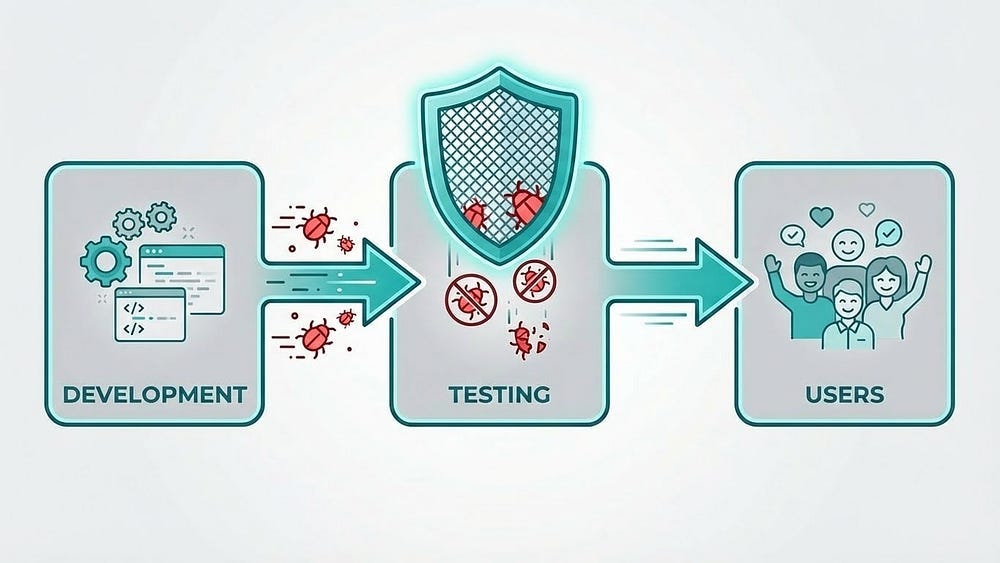
Identify defects before users encounter them — Finding and fixing bugs early prevents frustration, data loss, and potentially dangerous situations
Verify that software meets requirements — Ensuring the application does what stakeholders, customers, and users actually need
Build confidence in the product — Providing evidence that the software is ready for release
Reduce risk — Minimizing the chances of failures, security breaches, or financial losses
Ensure quality — Maintaining standards of performance, usability, and reliability
What Testing Is NOT
Before we go further, let’s clarify some common misconceptions:
Testing is NOT just about breaking things. Yes, testers try to find bugs, but the goal isn’t destruction — it’s information. Testers provide valuable data about software quality to help teams make informed decisions.
Testing is NOT just clicking buttons randomly. Professional testing is methodical, strategic, and requires critical thinking. Even exploratory testing (which we’ll cover later) follows structured approaches.
Testing is NOT something you only do at the end. Modern testing happens throughout the entire development process, from reviewing requirements to monitoring production systems.
Testing is NOT automated by default. While automation is powerful, human judgment, creativity, and critical thinking remain irreplaceable in testing.
The Core Activities of Software Testing
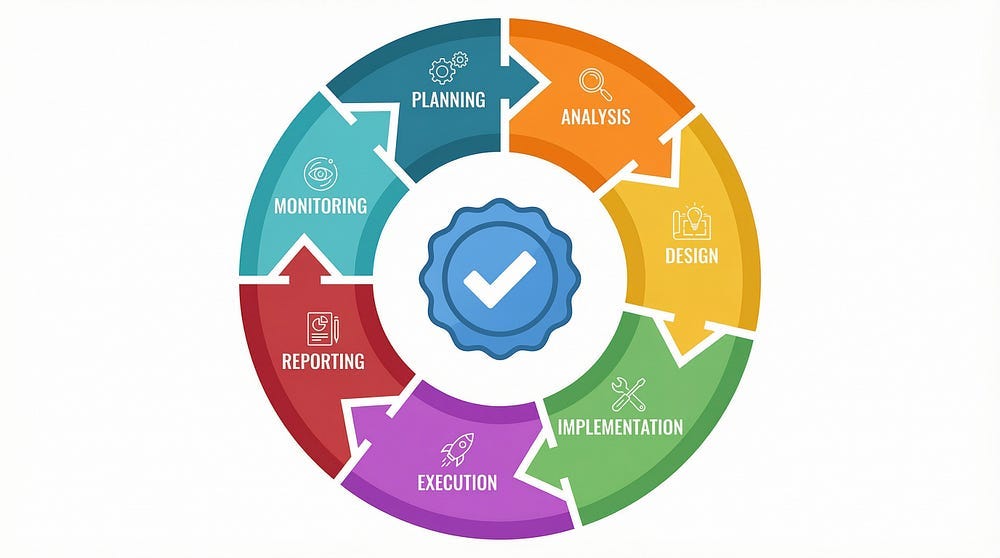
Software testing involves several interconnected activities that work together to ensure quality:
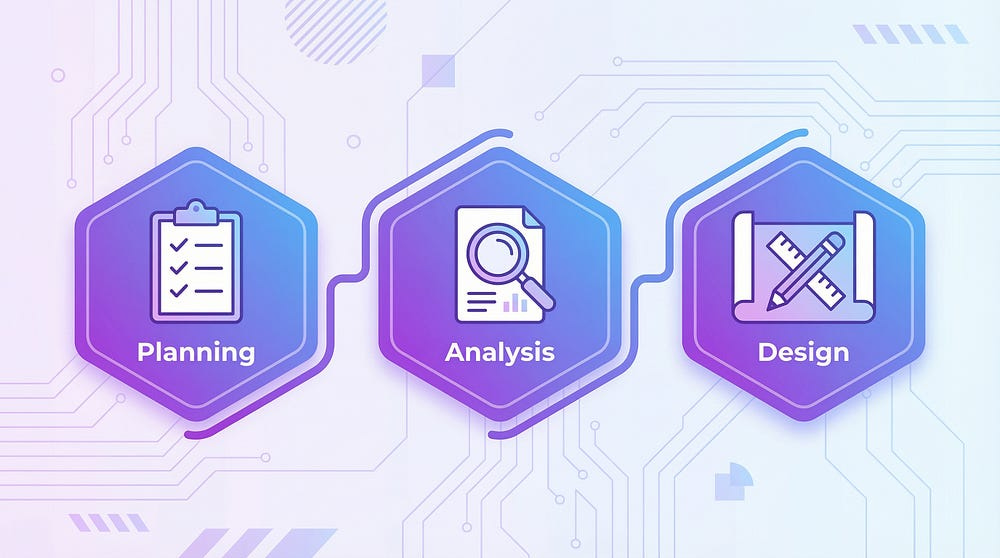
1. Planning
Before testing begins, you need a strategy. What will you test? How will you test it? What resources do you need? What are the risks? Planning sets the foundation for effective testing.
2. Analysis
This involves examining requirements, user stories, and specifications to understand what needs to be tested. You’re asking: “What should this software do? What could go wrong?”
3. Design
Here, you create test cases, test scenarios, and test data. You’re determining the specific steps and conditions you’ll use to verify the software works correctly.
4. Implementation
This is where you set up your test environment, prepare test data, and get everything ready to actually execute your tests.
5. Execution
The actual testing happens here. You run your test cases, compare actual results with expected results, and document your findings.
6. Reporting
You communicate what you found — both the good and the bad. Clear, actionable bug reports and test summaries help teams understand software quality and make decisions.
7. Monitoring and Control
Throughout the testing process, you track progress, adjust plans as needed, and ensure testing activities align with project goals.
The Value Software Testing Provides
You might be thinking: “Why not just build the software correctly the first time?” That’s a fair question, but here’s the reality:
Software is complex. Modern applications have thousands or millions of lines of code, integrate with multiple systems, run on various devices, and need to handle countless scenarios. Humans make mistakes, and complexity breeds defects.
Requirements change. What stakeholders want today might evolve tomorrow. Testing helps verify that changes don’t break existing functionality.
Users are unpredictable. People use software in ways developers never anticipated. Testing helps uncover these unexpected use cases.
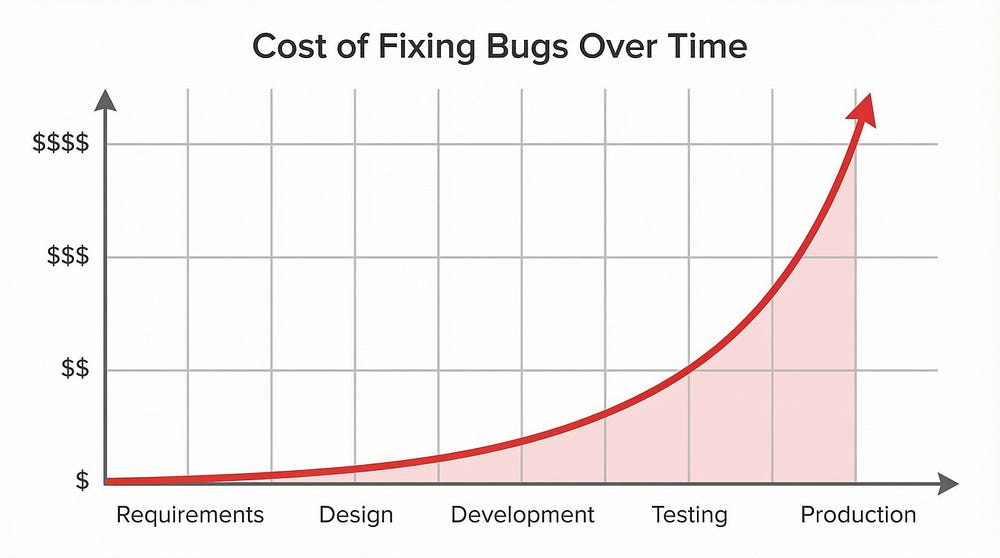
The cost of defects increases over time. A bug found during development might take an hour to fix. The same bug found in production could cost thousands of dollars and damage your company’s reputation.
Testing Provides Information, Not Just Pass/Fail
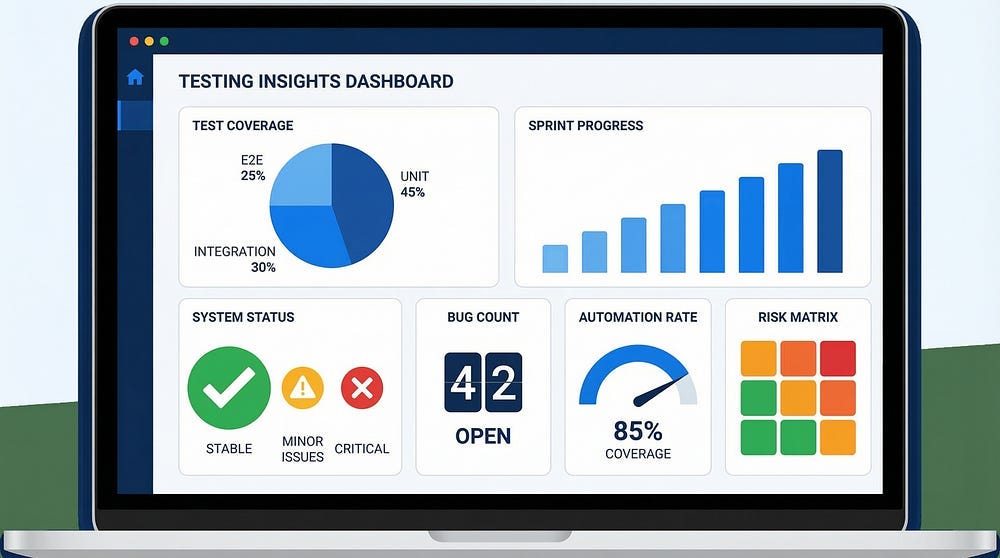
One of the most important concepts to understand early in your testing career is this: testing provides information to stakeholders to help them make informed decisions.
It’s not just about saying “this works” or “this doesn’t work.” Good testing answers questions like:
How stable is this feature under heavy load?
What risks remain if we ship this version?
Which areas have the highest concentration of defects?
How does this perform on older devices?
What happens if users lose their internet connection mid-transaction?
Types of Testing: A Quick Overview
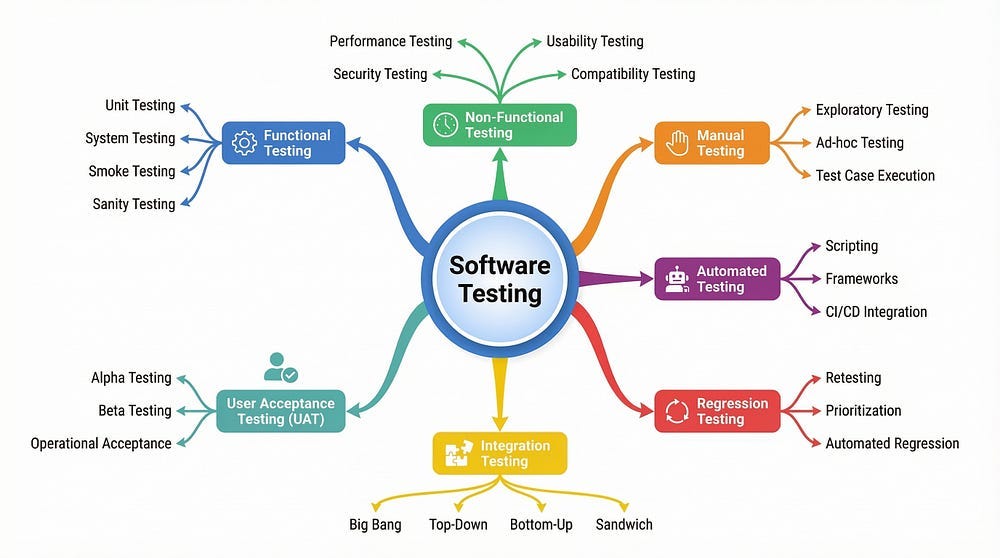
Software testing encompasses many specialized areas. Don’t worry — we’ll cover all of these in detail throughout this series. For now, here’s a brief overview:
Functional Testing — Verifying that the software does what it’s supposed to do according to requirements
Non-Functional Testing — Checking how the software performs (speed, security, usability, etc.)
Manual Testing — Testing performed by humans without automation tools
Automated Testing — Testing performed by scripts and tools to increase efficiency and coverage
Regression Testing — Ensuring new changes haven’t broken existing functionality
Integration Testing — Verifying that different components or systems work together correctly
User Acceptance Testing — Validating that the software meets user needs and business requirements
We’ll explore each of these in depth as we progress through this series.
The Testing Mindset: Thinking Like a Tester
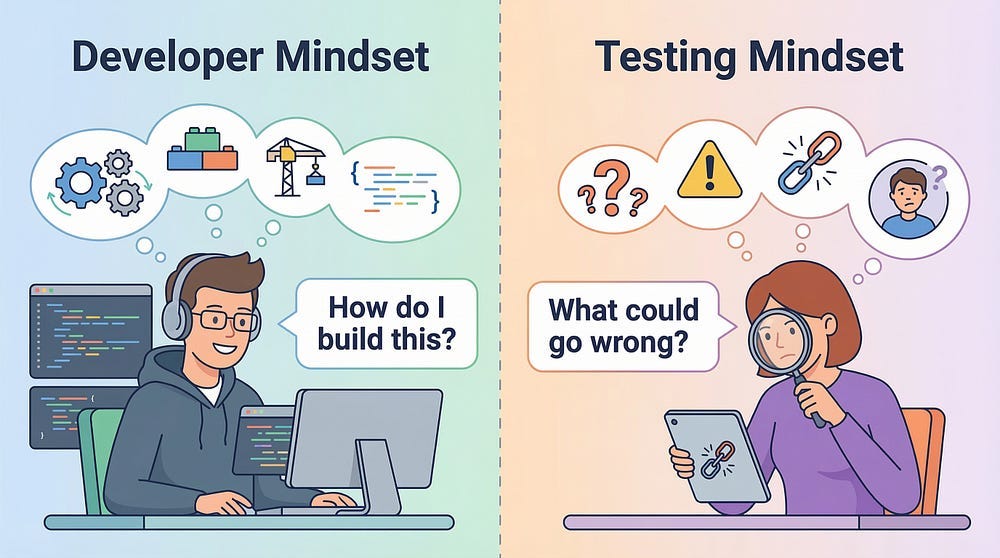
What separates a great tester from someone who just follows test scripts? The testing mindset.
Testers think differently. While developers ask “How can I build this?”, testers ask:
“What could go wrong?”
“What if the user does something unexpected?”
“How might someone misuse this feature?”
“What happens at the boundaries and edges?”
“What assumptions are we making that might be wrong?”
This isn’t about being negative — it’s about being realistically skeptical. Testers are advocates for quality and, ultimately, for users.
Quality Assurance vs Quality Control vs Testing
You’ll often hear these terms used interchangeably, but they have distinct meanings:
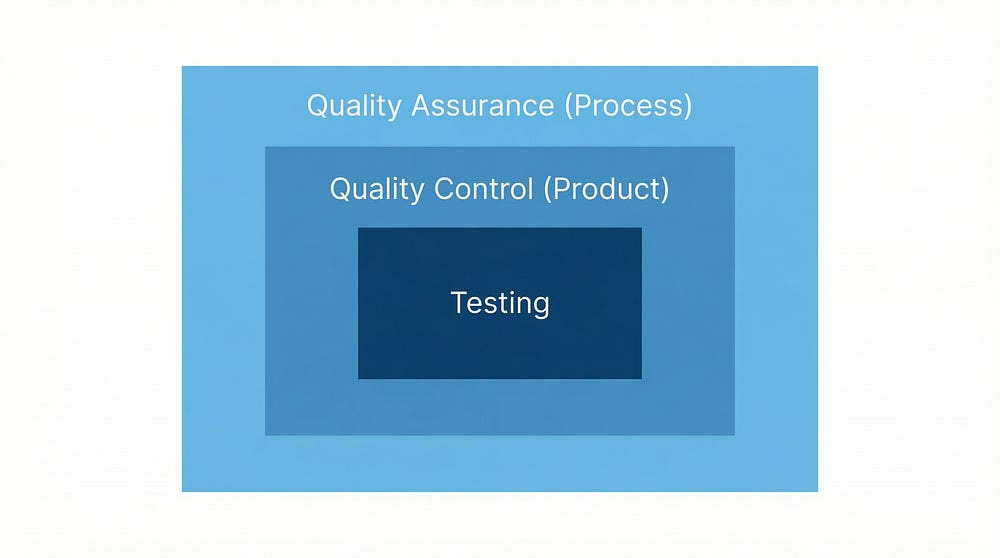
Quality Assurance (QA) is proactive. It’s about establishing processes and standards to prevent defects from being introduced in the first place. QA focuses on the process.
Quality Control (QC) is reactive. It’s about identifying defects in the product. QC focuses on the product itself.
Testing is a subset of Quality Control. It’s one of the primary methods we use to identify defects.
Think of it this way: QA is like training chefs properly and establishing kitchen standards. QC is like tasting the food before it goes to customers. Testing is the specific act of tasting and evaluating.
Testing in the Real World: A Simple Example
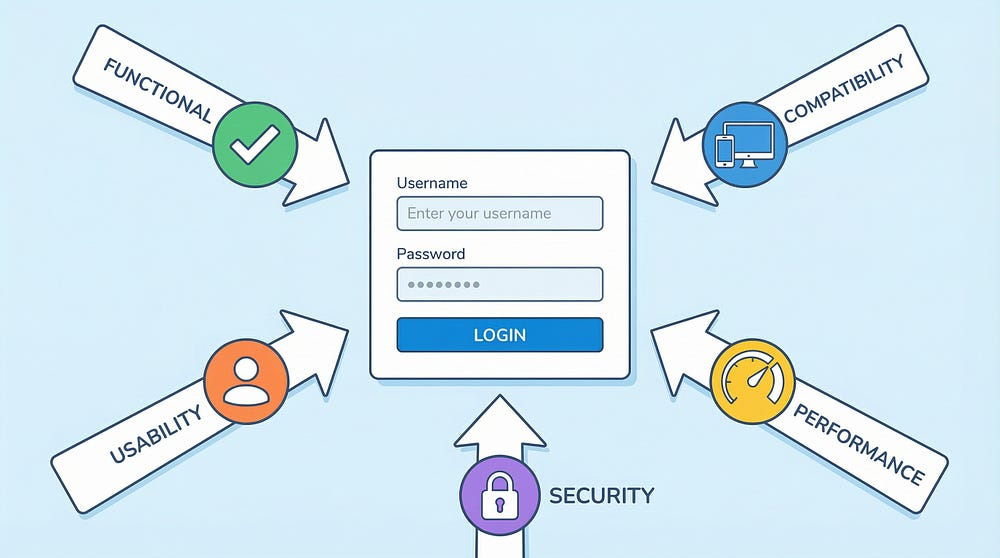
Let’s make this concrete with a simple example. Imagine you’re testing a login feature for a website. Here’s what testing might involve:
Functional Testing:
Does login work with valid username and password?
Does it reject invalid credentials?
Does “Remember Me” actually remember the user?
Usability Testing:
Is the login form easy to find and understand?
Are error messages clear and helpful?
Security Testing:
Is the password encrypted?
Does the system protect against brute force attacks?
Are there any SQL injection vulnerabilities?
Performance Testing:
How quickly does login complete?
Can the system handle 1,000 simultaneous logins?
Compatibility Testing:
Does login work on different browsers?
Does it work on mobile devices?
This single feature requires many different testing perspectives!
Why This Matters for Your Career
Software testing is a critical profession with strong career prospects. Here’s why:
High Demand: Every software company needs testers. As software becomes more complex and AI-driven tools proliferate, the demand for skilled testers who understand fundamentals and can apply critical thinking continues to grow.
Diverse Opportunities: Testing skills transfer across industries — finance, healthcare, gaming, e-commerce, government, and more. You can work in automation, security testing, performance testing, or specialize in emerging areas like AI testing.
Problem-Solving Focus: If you enjoy puzzles, critical thinking, and detective work, testing provides constant intellectual challenges.
Impact: Testers prevent bugs that could cost companies millions, protect user data, and ensure software is accessible to everyone. Your work directly impacts real people.
Career Growth: Testing roles range from manual testers to automation engineers, test architects, and quality leadership positions. Senior testers command strong salaries and have significant influence.
The Journey Ahead
This is just the beginning. Over the next 199 articles, we’ll build your testing expertise systematically:
Months 1–3: Testing fundamentals, manual testing techniques, and test design
Months 4–6: Test levels, specialized testing types, and modern approaches
Months 7–9: Automation foundations, tools, and advanced automation
Months 10–12: AI integration, critical evaluation, and the future of testing
Each article builds on the previous ones, giving you a comprehensive education in software testing — from foundational principles through cutting-edge AI integration.
Your First Action Step
Before we meet again in Article #2, here’s your homework:
Think about the software you use every day. Your banking app, social media, email, streaming services. Ask yourself:
What would happen if this software had bugs?
What could go wrong?
How might users misuse features?
What makes this software “quality”?
This simple exercise starts developing your testing mindset. You’re not just a user anymore — you’re beginning to think like a tester.

Welcome to NextGen QA
Software testing is more than a job — it’s a crucial discipline that ensures the technology we depend on actually works. As you begin this journey, remember:
Testing is about providing valuable information
Quality is everyone’s responsibility, but testers are its advocates
The fundamentals you learn now will serve you throughout your career
Critical thinking matters more than any specific tool
In our next article, we’ll explore The Seven Principles of Software Testing — timeless guidelines that have shaped the testing profession for decades and remain relevant in today’s AI-augmented world.
Welcome to testing. Welcome to NextGen QA. Let’s build your foundation together.
Next Article: The Seven Principles of Software Testing — Timeless guidelines every tester should know